The following is a reflection by Dr. Katherine L. Barrett, PhD, Assistant Professor of Biologycand Watershed Researcher.
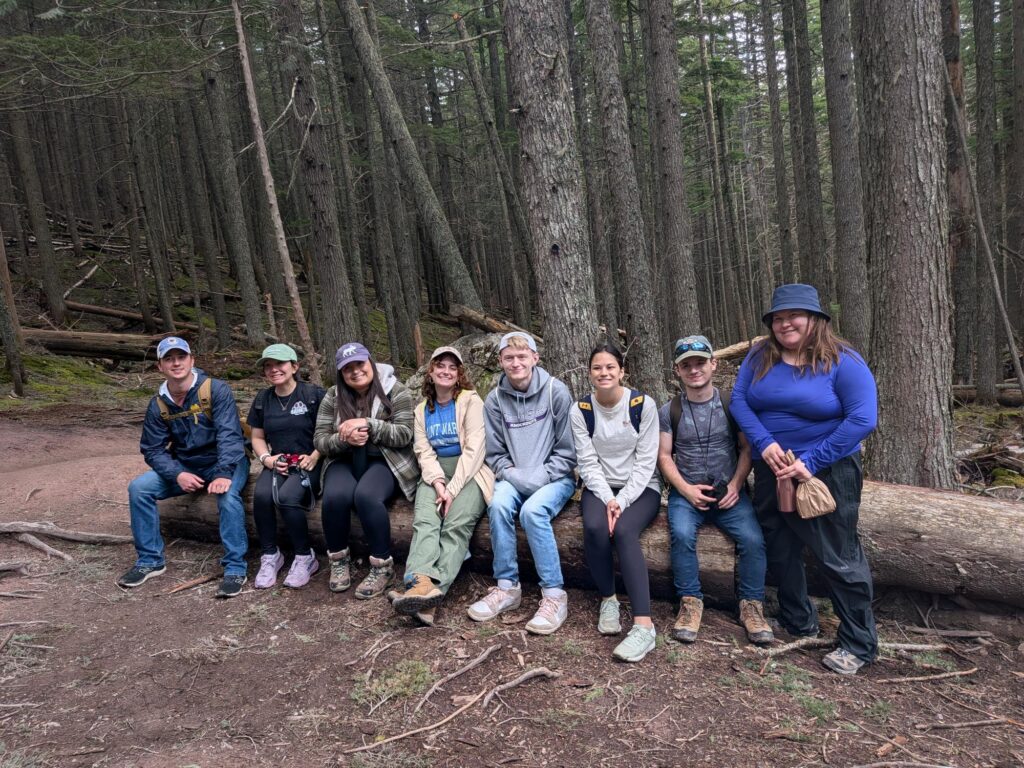
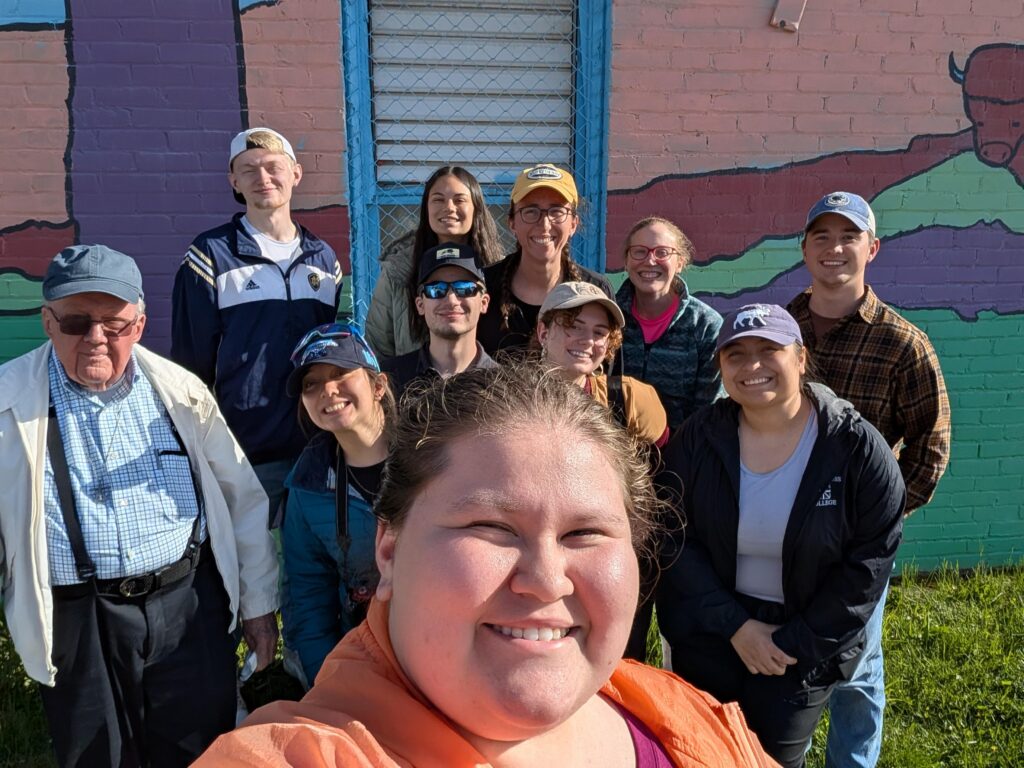
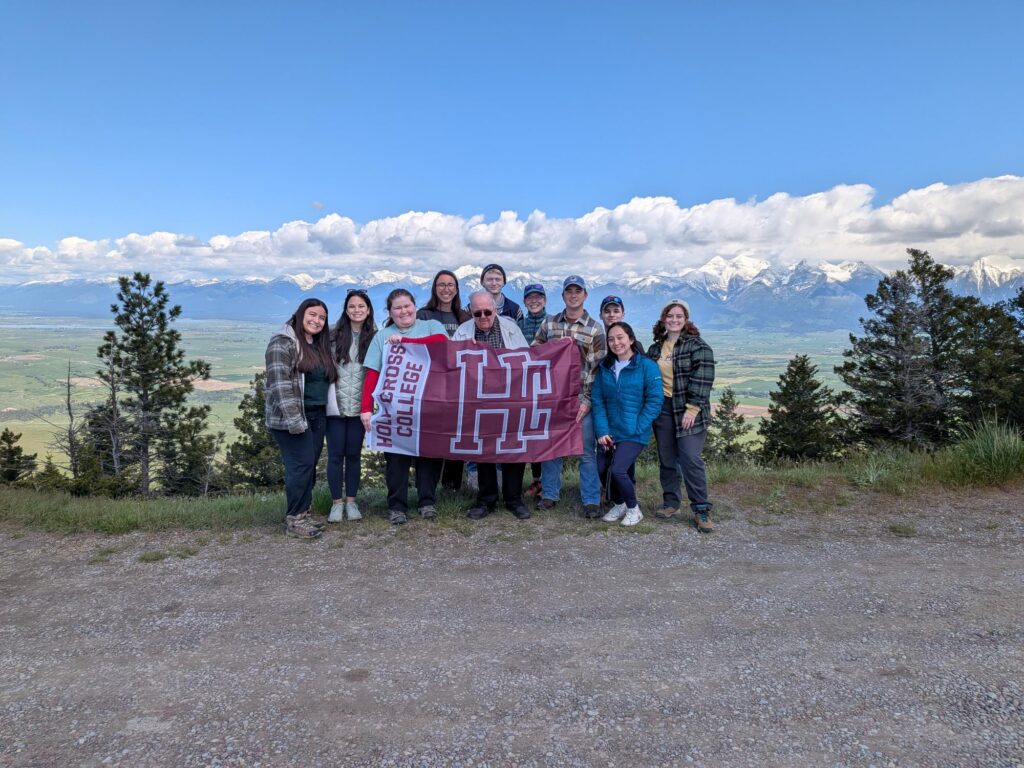
In the early morning of Sunday, May 17, 2026, seven HCC students and one SMC student joined HCC faculty lead Dr. Barrett and chaperones Professor Laura LeGare and Br. Lawrence Unfried, on a week-long course trip to the Flathead Indian Reservation in northwest Montana. Over the course of the week, students bore witness to ecological and spiritual resilience by observing, firsthand, the natural beauty and enormity of bison herds, the sacred song of the western meadowlarks, the short glimpses of black bears, bald eagles, elk, and more.
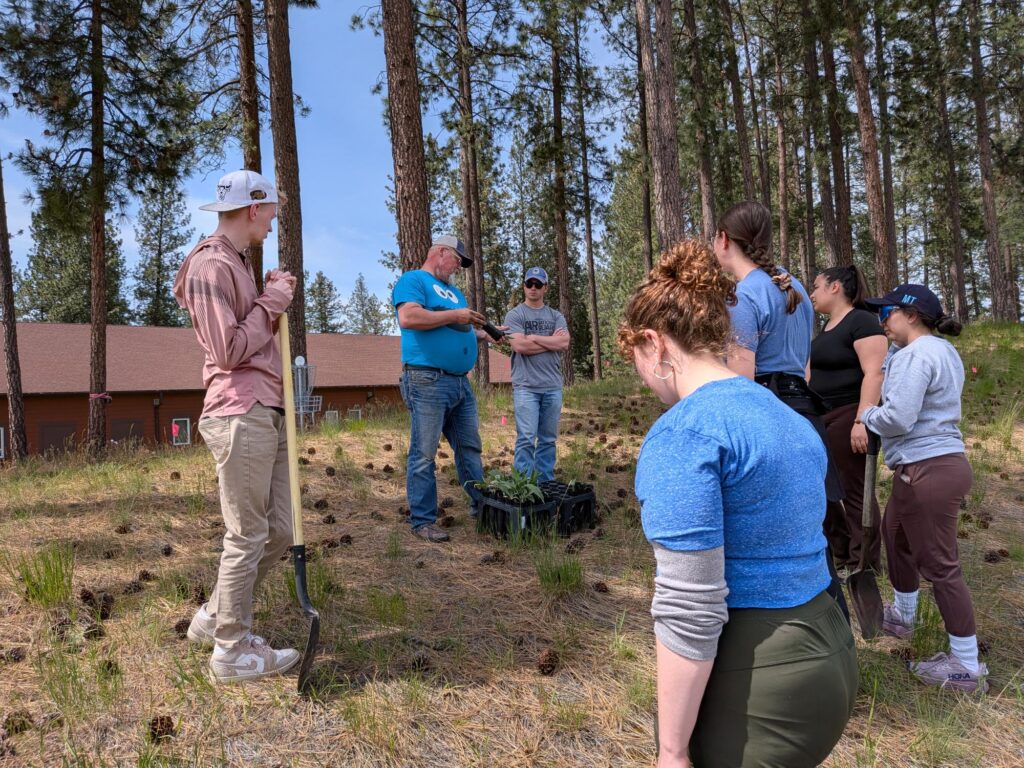
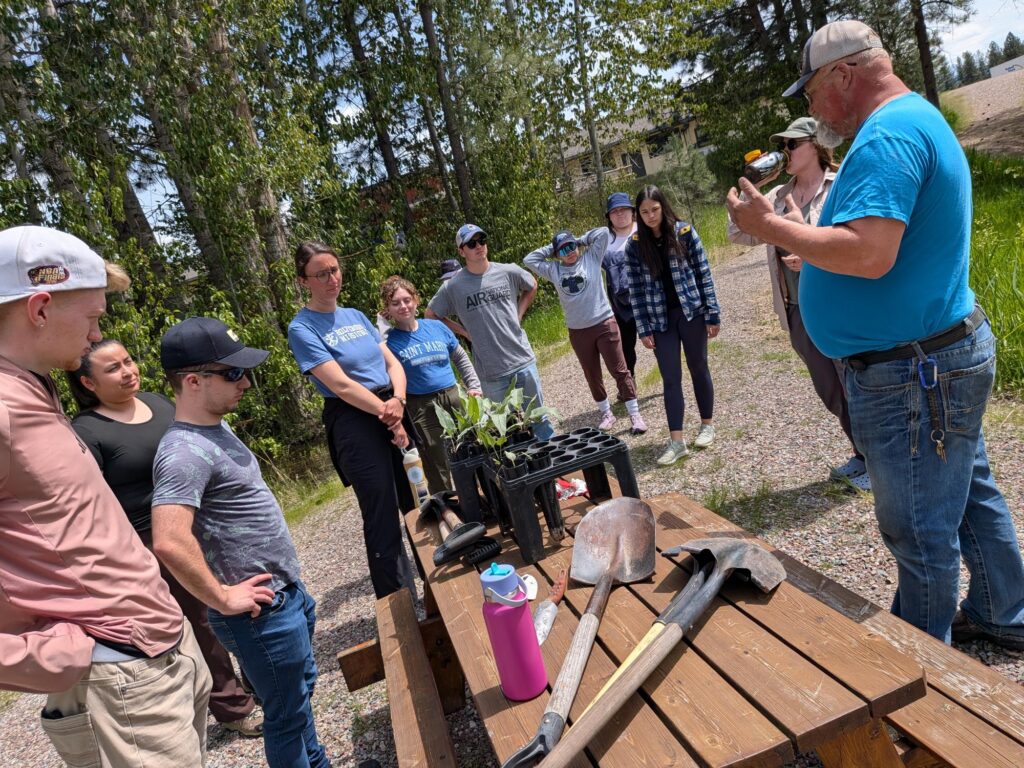
Our home base for the week was a rustic and cozy lodge at the Flathead Lake Biological Station, which is part of the University of Montana. Flathead Lake is the largest lake in North America west of the Mississippi, and one of the clearest lakes in North America. This trip took students to the Confederated Salish Kootenai Tribes Bison Range, an historic preserve that is home to 350 bison. While on the Bison Range, students met lead biologist Shannon Clairmont, who shared with them the significance of bison to the Salish and Kootenai people. While there, students and faculty also had the opportunity to participate in a service project that involved clearing pine trees on a hillside to promote the restoration of prairie grasses and flowers. Students also had the opportunity to meet with faculty and students at Salish Kootenai College (SKC), a tribal college on the reservation. Students learned about SKC’s campus-wide pollinator habitat restoration project and had the chance to contribute to this project by planting arrowhead balsamroot seedlings, a native prairie sunflower and medicine plant, on a small section of their campus.
Students developed an increased affinity for wild places and the diverse plants and animals that depend on these ecosystems. The stunning Mission Mountains that flanked our views to the east told a story of resilience and hope in the face of global change. Students stayed up late to watch the night sky, and they were delighted by the shooting stars that danced across the soft glow of the moon, a rare if not impossible experience in the Midwest. What’s more, a pristine beach brimming with rainbow rocks and inspiring views of Flathead Lake was our backyard, and students took time to be at the beach every day to greet the lake and sit in quiet reflection and prayer.
Near the end of the trip, students had a rare opportunity to meet with Germaine White, a widely respected cultural educator and community leader of the Confederated Salish and Kootenai Tribes. Germaine shared her knowledge and experience working in the realms of natural resources conservation and preservation of Salish language and culture. She greeted each student with genuine kindness and warmth, and she bode farewell to us by encouraging all of us to “remain hopeful” for the future, full of life, both human and more than human, that we will love. With this message hope and love resonating since coming back home, Dr. Barrett intends to make this Montana trip a regular, annual occurrence that will strengthen students’ love for nature and establish long-term partnerships with the Bison Range and Salish Kootenai College that are centered around a commitment to care for our common home.